
After 17 years sourcing in China, this is the question I get asked more than any other: “How do I find a good garment manufacturer?”
Most people start by looking for the biggest, most reputable-sounding factory they can find. That's usually the wrong move.
Why “big and famous” doesn't work for small brands
Large factories already have their big clients — major international companies with dedicated sourcing teams and serious order volumes. As a small or first-time brand, you don't have the leverage to get real attention there. You'll get squeezed into whatever slot is left, with whoever has time to deal with you.
The real barrier isn't money, and it isn't language
It's that you don't know what you don't know. Garment production in China is broken into tiny, specialized pieces — pattern making, cutting, sewing, embroidery, printing, finishing are usually all separate businesses. To make one garment well, all of these need to talk to each other. If you don't understand how that chain works, things go wrong fast, no matter how much budget you have.
One question that tells you almost everything
Don't ask a factory to send photos of their work — you'll only ever see their best sample shots, not what they actually produce day to day.
Just ask: “What do you make?”
If they can name one or two specific product types and describe the quality level — and it matches what you need — that's worth a small test order. If they say “we can make anything,” that's your sign to walk away. A small manufacturer has limited equipment and limited people. Nobody does everything well. “We can make anything” usually means they'll quietly hand your order to someone else for a cut.
A small manufacturer has limited equipment and limited people. Nobody does everything well.
Match your order size to the factory's size
This is the part most new brands get backwards. A factory built for big-brand volume isn't going to treat a 50-piece order with any real care — you're not worth their time, and you'll know it from how you're treated. Smaller factories, often with just 5–15 people, are frequently where the best quality actually comes from, because they've stayed small on purpose and only take work they can do well.
Where to go from here
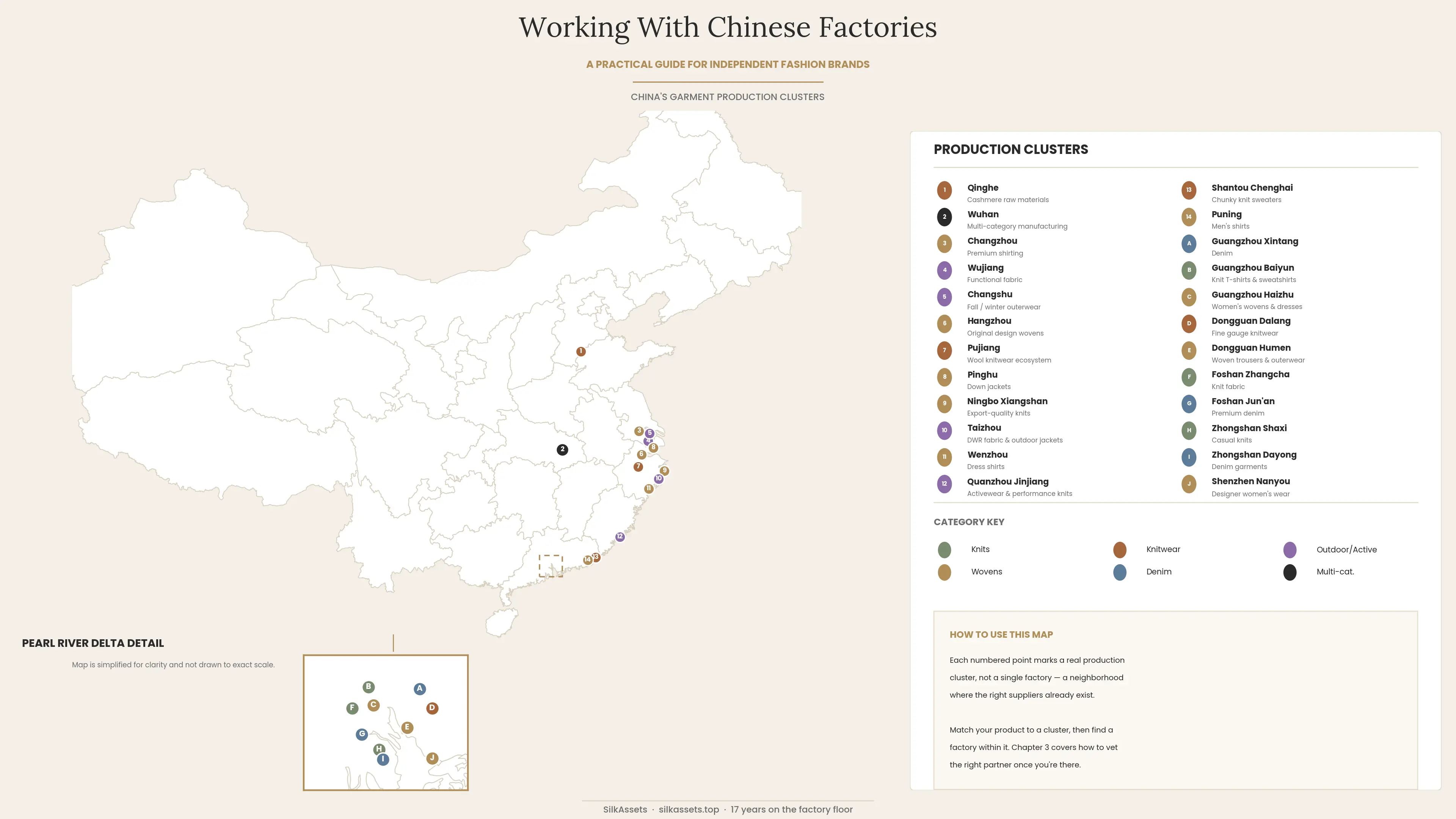
Finding the right fit takes more than one blog post — it depends on what you're making, where in China to even start looking, and how to vet a manufacturer once you've found a few options. That's exactly what Working With Chinese Factories walks through, chapter by chapter, with a map of 24 production clusters by category.
And if you'd rather not do the legwork yourself, factory sourcing and vetting is also part of our Full Production Management service — get in touch and we'll take it from there.